
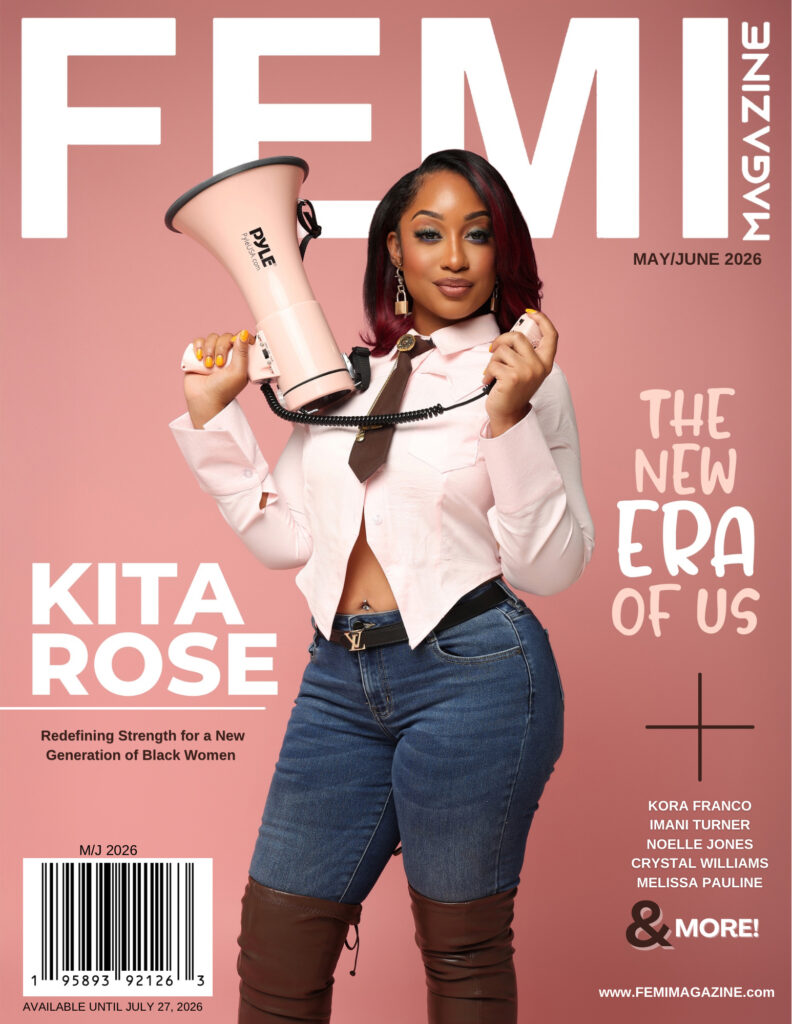


In an industry where opportunity is often gatekept and timelines are unpredictable, Samantha Cunha is choosing a different path—one rooted in ownership, intention, and impact. Emerging as both an actress and producer, she represents a new generation of storytellers who aren’t waiting for permission to be seen. Instead, she’s building platforms, producing meaningful content, and amplifying voices that reflect real, lived experiences. From culturally driven comedy to hard-hitting social narratives, her work bridges entertainment with purpose—proving that storytelling can be both powerful and transformative.

FEMI: You’re quickly emerging as both an actor and producer. What inspired you to take a hybrid approach to storytelling, and how has balancing both roles shaped the way you bring projects to life?
SAMANTHA: I started out as an actress—I’ve always loved entertaining and being in front of the camera, so I naturally fell into acting. As I continued growing in the industry, I realized I didn’t want to wait on opportunities—I wanted to create them. That’s when I began producing my own short films.
I fell in love with the process because it allowed me to be hands-on from start to finish and fully bring a vision to life. Balancing both roles has been incredibly powerful—not only can I tell the stories I want to see, but I can also create opportunities for other actors and creatives who deserve to be seen.
There’s so much incredible talent in South Florida, and it’s important to me to showcase that through my work.
FEMI: Your comedy micro-series I Don’t Even Speak Spanish, LOL explores identity and cultural belonging through humor. Why was it important for you to tell this story, and what conversations do you hope it sparks among audiences navigating similar experiences?
SAMANTHA: My fiancé, Julius Mendez, created and wrote LOL I Don’t Even Speak Spanish, and from the beginning, I knew I wanted to support him and help bring his vision to life. As a producer, I’m intentional about aligning myself with stories that mean something, and this one felt personal.
As a first-generation Brazilian in the United States, I deeply relate to the experience of navigating multiple cultures. You grow up as a bridge—connected to your roots through family, language, music, and tradition—but also shaped by the environment around you. At times, that can leave you questioning where you truly belong.
What drew me to this project is how it explores that identity journey through humor and honesty. Julius’s character is forced to confront who he is at his core, and that’s something many of us can relate to.
Through this series, I hope to spark conversations around identity, belonging, and self-acceptance—and to remind people that you don’t have to choose one side, you can honor both!
FEMI: With Traffick in the City, you tackle the serious issue of human trafficking within a dramatic narrative. What motivated you to explore this topic on screen, and how do you approach telling difficult stories with both sensitivity and impact?
SAMANTHA: What motivated me to explore this topic was the story behind it. Traffick in the Cityfollows a brother determined to take down the sex trafficking ring that trafficked his sister—an idea sparked by a real conversation with our friend Greg Brown after girls began going missing in an Atlanta college town. That question—what would I do if this happened to my sister?—became the foundation of the story he developed with Julius.
When I read the script, I immediately knew I wanted to be part of bringing it to life. But more importantly, I knew this was a story that had to be handled with care and responsibility.
That’s why we have consultants: Jumorrow Terra, Founder & CEO of SheMeHer, Inc. and President of the Broward Human Trafficking Coalition, as well as Angine Moss, Founder & CEO of Hosanna4Youth—leaders who are doing real, on-the-ground work in this space. Their insight helps guide our approach in the development of the series, ensuring we’re not just telling a compelling story, but telling it truthfully and respectfully.
For me, storytelling like this is about impact. It’s about raising awareness without retraumatizing, honoring the reality of what these women go through, and using our platform to shed light on an issue that’s often overlooked.
FEMI: Your upcoming feature film dives into the darker side of influencer culture and digital validation. What inspired this concept, and what message do you hope viewers take away about the influence of social media in our lives today?
This is a project that’s almost done, and I’m so excited for you guys to see it!
The team I work with, Road to Hollywood, came up during the early days of YouTube, experiencing influencer culture firsthand—before it became what it is today.
Watching that evolution, along with some of the real situations they went through, is what inspired them to create this feature film. That’s when I joined the team to help produce it.
This film dives into the darker side of social media—the pressure, the validation, and the real-life consequences that can come from chasing attention online.
The message I hope viewers take away is to be more intentional about how we show up online and to understand that what we post, say, and share doesn’t just live on a screen—it has real-world impact—sometimes in ways we don’t even realize.
FEMI: As a storyteller rooted in South Florida’s creative community, how important is it for you to amplify diverse voices and emerging talent, and what kind of legacy do you hope to build through the stories you create?
SAMANTHA: It’s so important to amplify diverse voices and emerging talent—there are so many stories that deserve to be told, and we have to be the ones to tell them.
The talent coming out of South Florida right now is undeniable—look out for us. We’re telling bold, authentic, and culturally driven stories that reflect who we really are.
For me, it’s bigger than just creating projects—it’s about building a platform and a pipeline for the next wave of storytellers. I want to be part of shifting the narrative and showing that world-class stories can come from anywhere.

The legacy I hope to build through my work is one of impact, stories that move people, shift perspective, and leave something meaningful behind. As storytellers, we shape culture, and I truly believe that God places this purpose in our hearts—to inspire, guide, and create meaningful change through the stories we tell.
Samantha’s journey is more than a career—it’s a calling. Whether she’s exploring identity through humor, shedding light on human trafficking, or unpacking the realities of social media culture, every project she touches carries intention. Rooted in South Florida’s thriving creative scene, she’s not only telling her story—she’s opening doors for others to tell theirs. As she continues to evolve, one thing is clear: Samantha isn’t just contributing to the culture—she’s helping reshape it, leaving behind a legacy defined by impact, authenticity, and purpose-driven storytelling.
Photos Courtesy of Samantha’s Media Team
Follow Us On Social Media!


