

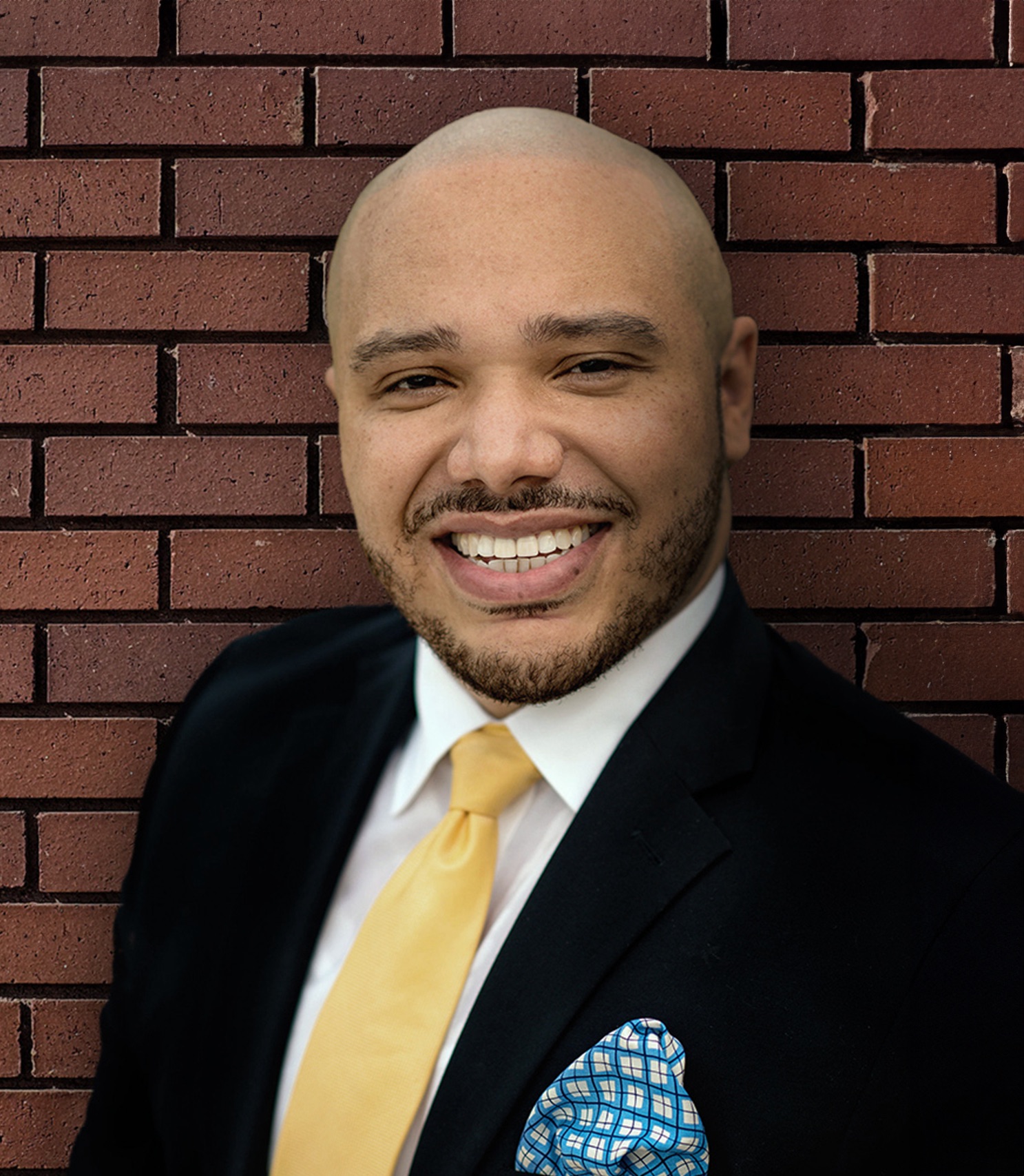
As conversations around artificial intelligence continue to evolve, many founders are embracing AI as a way to build leaner, faster-moving companies. From automating workflows to generating content, AI has quickly become a staple in modern entrepreneurship. But while most are focused on speed and efficiency, Aaron Sneed is approaching the technology from a different angle, one rooted in discipline, accountability, and sharper decision-making.
Instead of using AI as a tool to simply execute tasks, Sneed developed what he calls an “AI Council,” a network of specialized agents designed to challenge assumptions, pressure-test ideas, and strengthen business decisions before they are made. His approach shifts AI from being a passive assistant to an active participant in the decision-making process.
Sneed’s inspiration came from a common challenge many founders face: not a lack of ideas, but a lack of bandwidth. While traditional AI tools excel at drafting and summarizing, he found they often mirrored his own thinking rather than improving it. That reflection can increase speed, but it does not always enhance judgment. He wanted something more rigorous, a system that could expose risks, question logic, and elevate the quality of his decisions.

The result was the AI Council, a structured decision-support system designed to operate more like an advisory board than a digital assistant. Each agent within the council brings a different perspective, allowing Sneed to evaluate decisions across multiple dimensions such as strategy, operations, finance, communications, and execution risk. This multi-angle analysis helps transform scattered thoughts and competing priorities into clear, decision-ready insights.
What sets Sneed apart is how he fundamentally views AI’s role in business. While many founders treat AI like a faster intern, he treats it like a disciplined business system. His focus is not on producing more output, but on improving judgment. By applying multiple lenses to a single problem, he is able to identify weak logic, uncover hidden risks, and make more informed decisions.
This mindset is deeply influenced by his background in high-reliability industries, including aerospace, defense, and advanced manufacturing. In these environments, weak assumptions are not minor oversights, they can lead to costly delays, defects, and breakdowns in trust. That experience shaped his insistence that AI should challenge thinking rather than reinforce it.
For Sneed, agreement is easy, but accountability carries weight. He designed the AI Council to question his reasoning, highlight missing evidence, and push him toward greater clarity before making commitments. The impact has been a noticeable shift in how he approaches leadership, with decisions becoming more measured, disciplined, and intentional.
On a day-to-day basis, the AI Council begins with a clear focus: defining the decision at hand. Sneed outlines the constraints, priorities, and potential points of failure, then runs the scenario through a structured evaluation process. Each agent examines the decision from a different business perspective, helping him understand not just the opportunity, but the risks and implications tied to it. While the system supports planning, automation, and risk identification, the final decision always remains his responsibility.
That distinction is critical, especially as more companies consider reducing human roles in favor of AI systems. Sneed warns against this trend, predicting a potential rebound effect where businesses may need to rehire talent to properly train, manage, and refine their AI tools. In his view, AI still requires significant human oversight and will continue to do so for years to come.
His philosophy on AI integration is grounded in a principle often overlooked in fast-scaling environments: the importance of evidence. In high-stakes industries, it is not enough to deliver results. The process behind those results must be traceable, reviewable, and defensible. This perspective shapes how he uses AI, not as a shortcut to produce output, but as a system to reduce administrative burden while maintaining rigorous standards.
Sneed is also actively collaborating with academic institutions including Temple University, Yale University, Boston University, and the Florida Institute of Technology to further test and refine his models. This ongoing validation reflects his commitment to ensuring that AI systems are not only effective, but also reliable and accountable.
Despite the excitement surrounding AI-driven efficiency, Sneed believes many founders are misunderstanding its role in leadership. Speed, he argues, is not the same as effectiveness. AI can accelerate processes, but if the underlying systems are flawed, it will only accelerate failure. Leadership still requires setting standards, making informed trade-offs, and taking responsibility when outcomes shift.
In practice, Sneed sees AI’s greatest strengths in areas such as documentation, summarization, workflow structuring, and knowledge organization. These capabilities are especially valuable for lean teams looking to maintain consistency and clarity in their operations. However, AI still falls short in areas that require human judgment, including understanding context, evaluating consequences, and assuming responsibility.
At its core, AI does not carry accountability. It can assist with preparation and pattern recognition, but it cannot own outcomes. Sneed often reflects on a longstanding principle from early computing: a machine cannot be held accountable, and therefore should not be responsible for management decisions. That belief continues to guide how he integrates AI into his work.

To ensure accountability remains central, Sneed has made it a foundational design element within his system. Humans retain decision-making authority, final approvals, and ownership of results. AI plays a supporting role, helping to prepare and refine the work, but never replacing human responsibility.
One of the most valuable aspects of the AI Council is its ability to uncover subtle blind spots. These are not always obvious errors, but small gaps in thinking that can become costly over time. For example, a strategy may appear sound on paper but prove difficult to execute operationally. Or a promising idea may fail to account for the growing complexity of communication and documentation as a company scales.
The Council helps distinguish between a good idea and a decision-ready one. That distinction is critical in business, where moving too quickly from concept to commitment can lead to avoidable challenges. By slowing down the thinking process while maintaining operational speed, Sneed has created a model that balances innovation with responsibility.
As AI continues to reshape the business landscape, Sneed’s approach offers a compelling reminder that technology alone is not the answer. True leadership still requires clarity, discipline, and accountability. AI can support that process, but it cannot replace the human responsibility at the center of it.
Images Courtesy of Aaron Sneed
Follow Us On Social Media!